Flower choices for ceremonies at Hornchurch High Street venue
Posted on 04/10/2026
Choosing flowers for a ceremony sounds simple until you sit down and actually do it. Then the questions start. White or coloured? Classic or modern? Big statement pieces or something quietly elegant that lets the moment breathe? If you are planning Flower choices for ceremonies at Hornchurch High Street venue, the right decision is usually less about following a trend and more about matching the space, the tone of the day, and the people at the heart of it.
Hornchurch High Street has a particular feel: local, lively, and easy to imagine in all sorts of ceremony settings, from intimate family gatherings to more polished celebrations. That means your flowers need to work with the venue, not fight it. In this guide, we'll walk through what actually matters, how to choose arrangements sensibly, and how to avoid the small mistakes that can make a flower plan feel a bit off. Nothing fussy. Just practical, honest guidance that helps you make confident choices.
One thing you will notice straight away: good ceremony flowers are rarely about one single bouquet. They are about balance. A few well-chosen arrangements can change the whole mood of a room, set the colour palette, and make photographs look calmer and more cohesive. Let's get into it.
Why Flower choices for ceremonies at Hornchurch High Street venue Matters
Flowers do more than decorate a ceremony. They set tone. They soften hard edges, bring colour into the room, and help the venue feel personal rather than generic. In a Hornchurch High Street venue, where the setting may already have its own character, the flowers need to complement what is there: the light, the layout, the backdrop, even the flow of people entering and taking their seats.
That matters for a few reasons. First, ceremonies are emotional occasions. Guests notice the atmosphere before they remember the exact flowers. Second, the right florals make photography much easier. A pale, well-balanced arrangement in the right spot can make a room feel brighter and more composed. Third, practical venue use matters. Some arrangements can block sightlines, crowd a registrar table, or make movement awkward. Beautiful? Yes. Useful? That has to come too.
There is also the simple truth that a ceremony feels more intentional when the flowers are chosen with care. A modest arrangement can say "thoughtful" just as clearly as a large display. You do not need to go over the top. In fact, over-styling is one of the quickest ways to lose the calm, elegant feeling most people want.
Expert summary: The best ceremony flowers are the ones that suit the venue, support the moment, and stay visually calm in photographs. If the arrangement looks lovely but gets in the way, it is not the right arrangement. Simple as that.
How Flower choices for ceremonies at Hornchurch High Street venue Works
Choosing ceremony flowers usually starts with the setting and the purpose of the day. Are you planning a wedding ceremony, a naming day, a vow renewal, a family memorial, or another special gathering? Each occasion has a different floral mood. A wedding might lean toward roses, orchids, or soft pastel mixes, while a remembrance ceremony might feel more appropriate with white lilies, chrysanthemums, or gentle sprays with restrained colour.
Next comes the venue itself. A Hornchurch High Street venue may have limited table space, a compact ceremony area, or a reception room that serves more than one purpose. That changes what works. Tall arrangements can be striking, but if sightlines matter, low centrepieces or altar-style pieces may be better. Likewise, if the room already has strong decor, a simpler palette often works better than something very busy.
Then there is the practical side: timing, delivery, setup, and post-ceremony use. Some flowers are best for one focal moment, while others can be moved afterwards to a dining table, entrance, or memorial display. A sensible florist will help you think through how the flowers will function, not just how they will look at 10:30 in the morning.
If you need more general floral options for different occasions, you may find it helpful to browse the broader selection of all flowers and think about the mood you want before narrowing down the ceremony pieces.
In our experience, the smoothest ceremony plans are the ones where the couple or family chooses a clear colour direction first, then fits flower types around that. It saves a lot of back-and-forth. And yes, it saves a few late-night messages too.
Key Benefits and Practical Advantages
Well-chosen ceremony flowers bring both emotional and practical value. They are not just decoration; they are part of the experience. Here are the advantages that tend to matter most.
- They create a calm focal point. A ceremony room feels more settled when the floral design has a clear purpose.
- They improve photos. Flowers help frame the couple, speakers, or central figures without making the scene look empty.
- They can reflect meaning. Specific blooms and colours often carry personal or cultural significance.
- They work across different ceremony styles. Formal, relaxed, traditional, contemporary - there is usually a floral approach for each.
- They can be repurposed. Many arrangements can move from the ceremony space to a table, gift area, or family home afterwards.
- They help define scale. A small venue may only need subtle pieces, while a larger room can take stronger visuals.
One subtle but important benefit is confidence. When the flowers are sorted, everything else feels a bit easier. The room starts to come together in your head. That sounds small, but on a busy ceremony day, it is not small at all.
Who This Is For and When It Makes Sense
This kind of floral planning makes sense for anyone arranging a ceremony where presentation matters and the setting has to feel considered. That includes engaged couples, families planning naming ceremonies, people organising vow renewals, and those arranging memorial or tribute services where flowers are part of the message.
It is especially useful if you are working with a venue near Hornchurch High Street and want the flowers to suit a local, accessible setting rather than a huge formal hotel room. Smaller and mid-sized spaces often benefit from tighter editing. A few strong choices are better than lots of mixed ideas.
It also makes sense if you have a budget to respect. Ceremony flowers can be tailored up or down. Some people want a single bridal bouquet and buttonholes. Others need aisle pieces, a ceremony table arrangement, and matching displays for the reception. Planning early helps you decide where the money has the most impact.
If you are working across a wider floral plan, it can help to look at bouquet styles, sympathy flowers, or wedding pieces alongside one another. For example, a formal ceremony might include a classic bridal bouquet, matching buttonholes, and one or two understated focal arrangements such as a refined bridal bouquet and matching buttonholes. For a softer, more intimate feel, you might prefer gentler sympathy-style florals or a small, elegant bouquet that keeps things simple.
A quick reality check: if you are unsure whether the flowers should lead the design or simply support it, choose support. Most ceremonies are improved by restraint.
Step-by-Step Guidance
Here is a straightforward way to plan ceremony flowers without making the process harder than it needs to be.
- Start with the ceremony type. Wedding, memorial, renewal, christening, or something else? The purpose shapes the tone.
- Look at the venue layout. Check the entrance, aisle, ceremony table, seating area, and any corners that may need softening.
- Decide the mood. Elegant, romantic, classic, seasonal, understated, colourful, or symbolic. Pick one main direction.
- Choose a colour palette. Two or three main colours is usually enough. White and green is timeless. Pink and cream feels gentle. Red can be bold and romantic. Purple adds depth.
- Select flower types. Roses, lilies, hydrangeas, carnations, chrysanthemums, alstroemeria, and orchids all suit different tones and budgets.
- Match scale to the room. Small venue, smaller designs. Larger room, more structure. Do not let one table arrangement do the job of three.
- Check practical details. Delivery time, water sources, temperature, and whether arrangements need to move after the ceremony.
- Confirm any special meanings. This is especially helpful for memorials, faith-based services, or family traditions.
- Plan the handover. Who receives the flowers? Where do they go after the event? A little planning saves a lot of fuss.
That last step gets overlooked all the time. Yet it matters. There is nothing elegant about flowers sitting awkwardly in a corridor because nobody decided who was taking them home.
Expert Tips for Better Results
If you want the flowers to look polished rather than merely present, a few small decisions make a big difference.
Keep the palette tight
Using too many colours can make a ceremony feel visually noisy. One primary colour and one or two supporting tones usually gives the best result. White, blush, cream, and green is a classic combination for a reason. It photographs cleanly and works in almost any light.
Use height carefully
Tall arrangements can create drama, but they need space. In tighter venues, lower designs are often more comfortable for guests and easier on the eye. If you do want height, use it in one or two key spots rather than everywhere.
Match flowers to the season where possible
Seasonal flowers are often easier to source and can look fresher and more natural. Spring ceremonies may suit tulips, lilies, and soft mixed stems; summer can handle fuller colour and looser shapes; autumn can feel rich with deeper reds, golds, and textured greens. It does not have to be rigid, just sensible.
Think about the room at different distances
A bouquet can look lovely up close and disappear from the back row. Likewise, a dramatic installation may overpower a small room. Stand back in your mind. Or actually stand back, if you can. Little things like this stop surprises on the day.
Let one element lead
Maybe the bouquet leads, maybe the ceremony table arrangement leads, maybe the colour story leads. If everything is competing, the whole design gets muddy. One leader is enough.
A slightly cheeky truth: flowers that are trying too hard usually look like they are trying too hard. You want elegance, not floral theatre. Well, maybe a touch of theatre if the day calls for it. But only a touch.
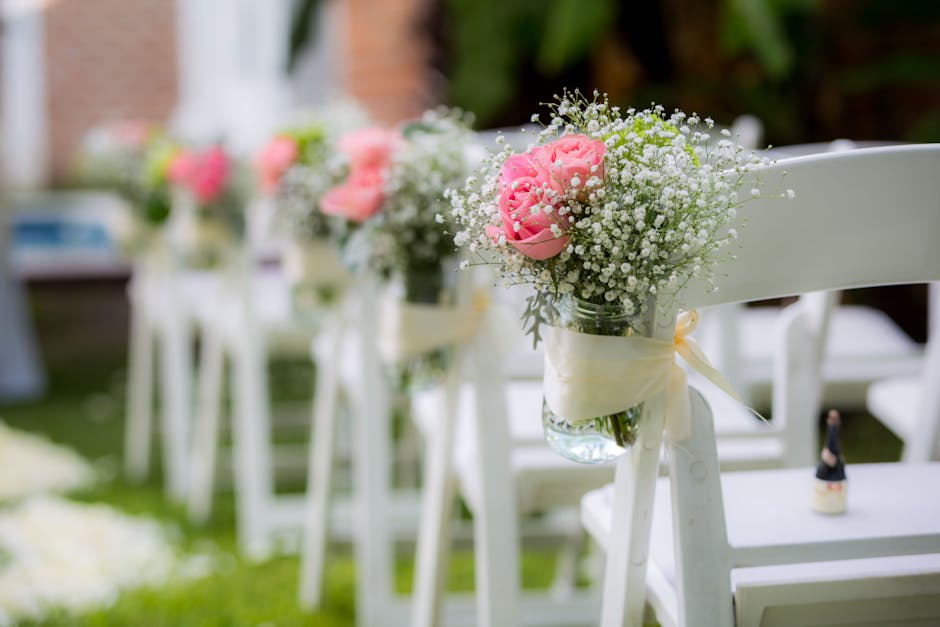
Common Mistakes to Avoid
There are a handful of mistakes we see again and again. They are all avoidable, which is the good news.
- Choosing flowers before checking the venue. A design that works in a large hall may feel crowded in a smaller room.
- Ignoring sightlines. Guests should be able to see the couple, speakers, or central figures without peering around flowers.
- Using too many styles at once. Mixing formal, rustic, modern, and vintage all in the same setup can feel confused.
- Forgetting transport and timing. Fresh flowers need careful delivery and sensible setup windows.
- Picking blooms only because they are popular. Popular does not always mean right for your ceremony.
- Not planning reuse. Some flowers can be reused after the ceremony, which is both practical and good value.
- Overlooking meaning. For some families, flower choice carries emotional or cultural weight. It deserves attention.
One common headache is the "too much white" problem. White flowers are beautiful, but if the venue is also pale and the room lighting is soft, everything can blur together. A bit of green, blush, or textured foliage usually solves that quietly.
Another is ordering more than the space can hold. Bigger is not always better. Sometimes it just means people are shuffling around a giant arrangement trying not to knock it over. Not ideal.
Tools, Resources and Recommendations
You do not need a dozen apps or a giant planning spreadsheet, although some people do enjoy that sort of thing. A simple system is usually enough.
- Venue photos: Bring images of the room, entrances, tables, and any focal points. Even phone pictures help.
- A colour swatch or mood board: Useful if you are matching dresses, suits, stationery, or decor.
- A guest flow plan: Helps decide where arrangements can safely sit without causing bottlenecks.
- Budget tiers: Decide your "must have" items and your "nice to have" items.
- Flower-care guidance: Ask about how to keep arrangements fresh before the ceremony and during the day.
If you need everyday floral support outside the ceremony itself, you can also look at flower care advice for handling arrangements once they arrive, or explore delivery information if timing is a major concern.
For couples or families who want a more curated arrangement without choosing every stem individually, a florist-led option can be helpful. Something like florist choice or a higher-value florist choice arrangement can save time while still keeping the design professional and fresh-looking.
If you are planning a full floral setup, it can also be worth looking at ceremony-adjacent pieces such as wedding flowers, bridal bouquets, and baskets and posies. That gives you a better sense of style families and price points, which makes decisions easier.
Law, Compliance, Standards, or Best Practice
For most ceremony flower planning, the main concerns are practical best practice rather than heavy regulation. Still, a few common standards are worth keeping in mind.
First, venues usually have rules about access, setup times, fire exits, and what can be attached to walls, railings, or furniture. Always check the venue's own requirements before finalising large displays. This is especially important if you are considering freestanding arches, tall pedestal arrangements, or anything that could affect movement in the room.
Second, if flowers are going into a church, registry-style venue, hire space, or function room, do not assume all adhesives, candles, or decorative materials are allowed. Many venues are fairly relaxed, but some are careful for safety reasons. Better to ask than to arrive with a plan that needs reworking on the spot.
Third, if you have guests with pollen sensitivities or strong fragrance concerns, it is sensible to choose lower-scent options where possible. That is not a legal issue as such, just good manners and good planning. A ceremony should feel comfortable for people, not overwhelming.
Finally, for memorial or tribute ceremonies, best practice usually means checking wording, colour choices, and symbol use carefully with family members. Different traditions can carry very different meanings. A respectful conversation at the start saves awkwardness later. Honestly, it saves heartache too.
Where sustainability matters, some people prefer arrangements with reusable containers, seasonal stems, or reduced foam use. If that is important to you, you can discuss it early and consider options that align with the venue and the day's purpose. The same goes for accessibility: keep pathways clear and avoid arrangements that force guests to squeeze past or duck under.
Options, Methods, or Comparison Table
Below is a simple comparison of common ceremony flower approaches. The right choice depends on room size, budget, and the mood you want.
| Option | Best for | Strengths | Possible drawback |
|---|---|---|---|
| Bridal bouquet plus buttonholes | Smaller ceremonies, intimate weddings, simple styling | Elegant, focused, good value, easy to carry | May feel minimal if the room itself needs more dressing |
| Low ceremony arrangements | Tables, registrars, compact venues | Does not block sightlines, suits photographs, practical | Less dramatic from a distance |
| Tall focal pieces | Grander rooms, entrances, statement moments | Striking, memorable, shapes the space | Can crowd a small venue if not scaled carefully |
| Seasonal mixed flowers | Relaxed, natural, colourful ceremonies | Fresh feel, flexible palette, often visually rich | Needs tighter guidance to avoid looking too busy |
| White-and-green classic styling | Traditional ceremonies, formal rooms, timeless looks | Calm, refined, photographs well, hard to date | May need texture or accent colour to prevent flatness |
If you are unsure, the low arrangement or white-and-green route is usually the safest place to begin. You can always add a touch more colour later. Removing it is harder, as people often discover at the last minute.
Case Study or Real-World Example
Here is a realistic example based on the kind of brief people often bring to a Hornchurch High Street venue.
A couple planning a late-spring ceremony wanted something elegant but not formal. The venue room was not huge, and they were worried that large floral displays would make it feel crowded. They also wanted the flowers to appear soft in photographs, with enough colour to feel personal but not so much that it became busy.
The final plan was simple: a compact bridal bouquet, matching buttonholes, one low arrangement near the ceremony table, and a small floral piece near the entrance. The palette was white, blush, and fresh green. Roses did most of the work, with a few softer mixed stems to stop the design feeling stiff. The result was calm, polished, and easy to move after the ceremony.
What made it work was not extravagance. It was editing. They did not try to fill every space. They picked the most visible points and treated them properly. Guests noticed the room felt beautiful, but nobody felt boxed in by flowers. That is usually the sweet spot.
In another setting, a family planning a memorial-style ceremony chose white lilies and chrysanthemums with restrained foliage, because they wanted the space to feel peaceful and respectful. The flowers were placed so the central area stayed uncluttered. The atmosphere felt composed. Quiet, even. Which, for that kind of day, is exactly right.
Practical Checklist
Use this before you confirm anything. It keeps the plan grounded.
- Have I confirmed the type of ceremony and the mood I want?
- Do I know the venue layout and any space limitations?
- Have I chosen a main colour palette?
- Do the flowers suit the time of year?
- Will the arrangements block sightlines or walkways?
- Do I want low arrangements, tall pieces, or a mix?
- Have I thought about fragrance, pollen, or guest comfort?
- Will any flowers be reused after the ceremony?
- Do I need matching items such as bouquets, buttonholes, or table pieces?
- Have I checked delivery and setup timing?
- Do any cultural or family traditions affect the choice of flowers or colours?
- Am I happy that the final plan feels calm, not crowded?
If you can tick most of those off, you are in a good place. If a few boxes are still blank, that is fine too. Better to pause now than to rush a choice that feels "almost right."
Conclusion
The best flower choices for a ceremony at a Hornchurch High Street venue are the ones that fit the room, support the mood, and feel true to the people involved. That may mean a classic white palette, a soft seasonal mix, or a simple set of arrangements that quietly elevate the space. There is no single perfect answer, and that is part of the point.
What matters most is clarity. Once you know the purpose of the flowers, the venue constraints, and the emotional tone you want to create, the rest gets much easier. Keep the design thoughtful, keep the scale sensible, and do not be afraid of restraint. Truth be told, restraint often looks more luxurious than excess anyway.
Get a free quote today and see how much you can save.
And if all you do next is choose one colour direction and one focal arrangement, that is still progress. A calm, well-chosen flower plan has a way of making the whole day feel lighter.
Frequently Asked Questions
What are the best flower choices for ceremonies at Hornchurch High Street venue?
The best choices are usually flowers that suit the room size, ceremony type, and colour palette. White roses, lilies, orchids, hydrangeas, and soft mixed blooms are all strong options, depending on whether you want a classic, modern, or more personal feel.
How far in advance should I arrange ceremony flowers?
As early as you comfortably can. That gives you time to confirm the venue layout, finalise colours, and make sure the florist can source the right flowers. For busier dates, leaving it late can narrow your options quite a bit.
Do ceremony flowers need to match the bridal bouquet exactly?
No, not exactly. Matching can be elegant, but a good design often uses a shared palette rather than an identical look. That way the flowers feel coordinated without becoming too stiff or repetitive.
Which flowers work well in a small venue?
Smaller venues usually suit low arrangements, compact bouquets, and simple centrepieces. Flowers such as roses, carnations, alstroemeria, and lisianthus-style mixes can work very well because they are neat, tidy, and not overpowering.
Are white flowers always the safest choice?
White flowers are timeless and easy to style, but they are not always the only safe option. If the room is very pale, a little green, blush, or lavender can stop the design from looking flat. A touch of contrast helps more than people expect.
Can ceremony flowers be reused afterwards?
Yes, often they can. Some arrangements can move from the ceremony space to a reception table, family home, memorial area, or gift table. It is worth planning that in advance so nothing is wasted.
What flowers are suitable for a memorial or tribute ceremony?
White lilies, chrysanthemums, roses, and gentle sprays are commonly chosen for memorial settings, though the right selection depends on family preference and the tone of the service. Quiet, respectful designs usually work best.
How do I choose flowers if I have a tight budget?
Focus on the most visible areas first. A well-made bouquet, one focal arrangement, and a small number of matching pieces can look far better than trying to cover everything. Using seasonal flowers and a tighter colour palette can also help.
Should I worry about scent or pollen in ceremony flowers?
Yes, especially if the venue is enclosed or you expect guests with sensitivities. Strongly scented flowers can be lovely, but they are not always practical for every room. A good florist can steer you toward lower-fragrance options if needed.
Can I mix different flower styles in the same ceremony?
You can, but it works best when there is a clear thread holding everything together, such as a consistent colour palette or flower family. Without that, mixed styles can start to look accidental rather than intentional.
What is the most common mistake people make with ceremony flowers?
Choosing arrangements that are too large or too busy for the venue is probably the most common mistake. Flowers should enhance the ceremony, not crowd it. The room still needs to breathe.
How do I make the flowers look good in photos?
Use balanced colours, avoid blocking key sightlines, and keep the design clean around the main ceremony area. Flowers that work in natural light and do not clash with the room usually photograph best. That part matters more than most people think.
Can I ask for florist choice if I am unsure?
Yes, and in some cases that is the smartest move. If you trust the florist and give them clear guidance on colour, tone, and budget, a florist-choice option can save time and still give you something elegant and well matched to the occasion.
What should I bring when discussing ceremony flowers?
Bring venue photos, a rough guest count, colour ideas, any outfit details, and a sense of budget. If you have a family tradition or special meaning behind certain flowers, mention that too. The clearer the brief, the better the result.